Due to increasing human activities and global changes, lakes worldwide are facing numerous challenges, including sediment accumulation, altered hydrological regime, toxic substance pollution, eutrophication, declining fishery resources, loss of biodiversity, ecosystem degradation, and tense human-lake relationships. Addressing these issues requires the collective wisdom of global lake researchers.
To gather global insights on lake conservation and utilization, and to stimulate new ideas and exchange innovative practices, Jiangxi Normal University proposes the organization of the Conference on Great Lakes Research and the establishment of the Forum for Great Lakes Research. An Advisory Committee for this forum has been established, with Professor Xi Chen,Zhejiang University of Technology, serving as the the Chairman of the Advisory Committee, Professor Lin Hui as the General Secretary. The committee comprises 32 experts from around the world specializing in lake and basin research.
This forum is committed to promoting interdisciplinary integration through long-term monitoring, scientific research, technological demonstrations, and knowledge sharing. The ultimate goal is to achieve the health of lake ecosystems, sustainable economic prosperity, and harmonious human-nature relationships within lake regions, which can contribute to the achievement of the United Nations Sustainable Development Goals (SDGs) on a lake and basin scale.
The 2023 conference was held at Poyang Lake, the largest freshwater lake in China; the 2024 conference took place at the Caspian Sea, the world’s largest lake by surface area; and the 2025 conference was hosted at Lake Victoria, the second-largest freshwater lake in the world. The 2026 conference is scheduled to be held at Lake Baikal—the deepest and oldest freshwater lake on Earth, nestled in southern Siberia, Russia. Lake Baikal reaches a maximum depth of approximately 1,642 m, making it the deepest lake globally. It contains about 20% of the world's unfrozen freshwater and is renowned for its remarkable clarity and extraordinary biodiversity. Surrounded by rugged mountains and dense forests, the lake holds profound ecological value and deep cultural and spiritual significance for local communities.
This conference will focus on the following research directions for academic presentations: hydrology and water environment, watershed water resources management, environmental dynamic monitoring, ecosystem health assessment, ecological warning platform construction, environmental pollution prevention and control, ecological restoration and reconstruction, biodiversity conservation, sustainable development and utilization of lake resources, lake basin ecological economy and green development, watershed governance and comprehensive management.
V.B. Sochava Institute of Geography, Siberian Branch, Russian Academy of Sciences, Russia
Key Laboratory of Poyang Lake Wetland and Watershed Research (Jiangxi Normal University), Ministry of Education, China
School of Geography and Environment, Jiangxi Normal University, China
College of Geoinformatics, Zhejiang University of Technology, China
Zhejiang–Kazakhstan Joint Laboratory of Spatiotemporal Intelligence and Sustainable Development
Conference Time & Venue:
August 2 – August 8, 2026 | Irkutsk and Moscow, Russia
Conference Theme:
Lake Eco-environmental Conservation and Sustainable Development in Great Lake Basins
Conference Schedule:
Date | Time | Program |
August 2 | 9:00-17:00 | Registration and city tour (Irkutsk) |
August 3 | Whole day | Parallel sessions, roundtable meeting and closing ceremony |
August 4–5 | Whole day | Excursion to Lake Baikal (Olkhon Island) |
August 6–8 | Whole day | Visit lake and water research institutions in Moscow |
Conference language:
English
The registration fee covers attendance permission, conference materials and coffee break. Its amount will be released in 2nd circular announcement. Participants are responsible for covering their own accommodation expenses. Detailed hotel information will be provided in 2nd circular announcement.
Contact Persons:
Dr. Anastasiia Miadzelets, nasiya@mail.ru
Dr. Wenjing Yang, yangwenjing@jxnu.edu.cn
For any issues related to this conference, please feel free to contact us.
Secretariat of the Forum for Great Lakes Research
February 26, 2026
Registration Form
Institution | |||||
Name | Gender | Professional title | Oral presentation title | Mobile phone number/email address | |
Time of arrival | ________, 2026 | Time of departure | August _____, 2026 | ||
Participants are kindly requested to send the completed registration form to yangwenjing@jxnu.edu.cn or nasiya@mail.ru before May 1, 2026.
Lake Baikal –The World's Largest Freshwater Lake
Lake Baikal, the world’s largest freshwater lake by volume and the deepest lake on Earth, is a natural marvel nestled in southern Siberia, Russia. Spanning approximately 31,722 km² in surface area and plunging to a staggering depth of 1,642 meters, it holds an estimated 20% of the planet’s unfrozen surface freshwater—more than all the North American Great Lakes combined. Surrounded by rugged mountains and dense taiga forests, Lake Baikal lies within a tectonic rift valley that has been slowly forming for over 25 million years, making it one of the oldest lakes in the world. Its crystal-clear waters are fed by more than 300 rivers and streams, with the Selenga River being the largest contributor, while its sole outlet is the Angara River, which flows northward into the Yenisei system.
The lake experiences a harsh continental climate, with long, frigid winters during which its surface freezes solid for up to five months, and short, mild summers that bring brief but vibrant bursts of biological activity. Despite its northern latitude, Lake Baikal hosts an extraordinary level of biodiversity: over 80% of its 2,500+ plant and animal species are endemic, including the iconic Baikal seal—the only freshwater seal in the world—and numerous unique amphipods and fish such as the omul. The lake’s shoreline stretches over 2,100 kilometers and is dotted with scenic bays, thermal springs, and scattered islands, the largest of which is Olkhon Island, a sacred site in Buryat culture and a growing destination for eco-tourism.
First documented by Russian explorers in the 17th century—though long known to indigenous Buryat and Evenk peoples—Lake Baikal was designated a UNESCO World Heritage Site in 1996 in recognition of its exceptional natural value. Today, it serves not only as a vital resource for local communities who rely on it for fishing, transportation, and spiritual connection, but also as a global sentinel for studying climate change, tectonic activity, and freshwater conservation. Revered as the “Pearl of Siberia” and often called the “Galápagos of Russia”, Lake Baikal stands as both a scientific treasure and a symbol of Earth’s ancient, enduring beauty.
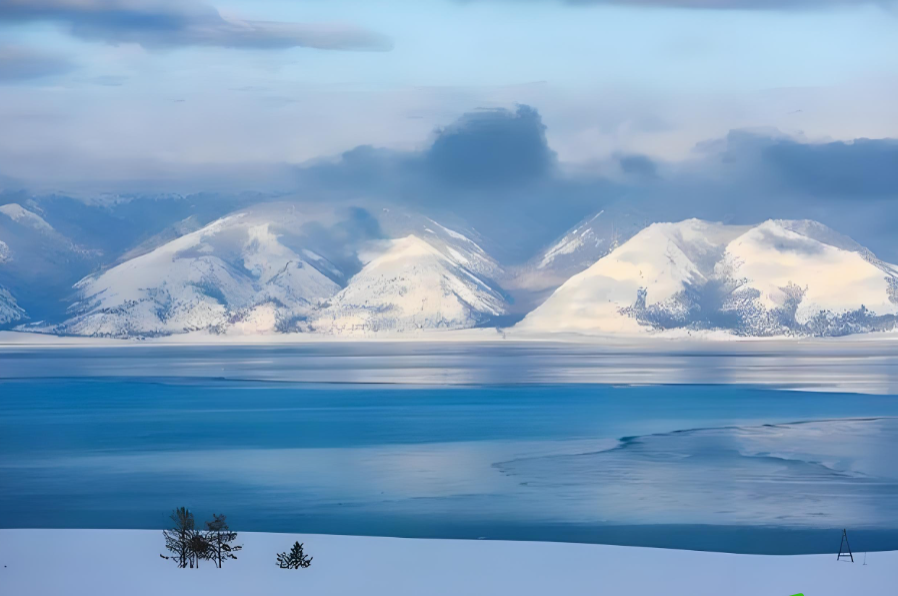
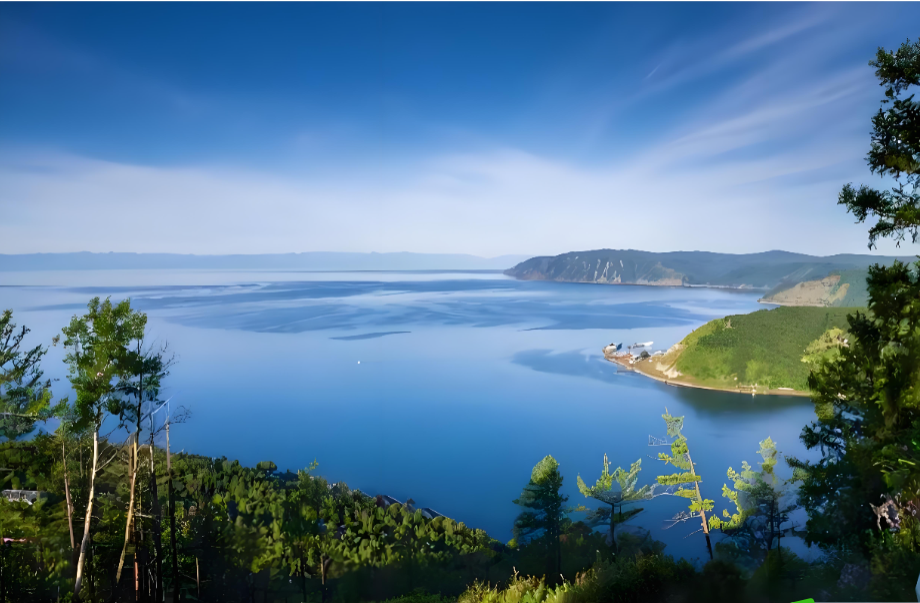
Lake Baikal